

Measure your head before choosing a wig, then check how the cap sits at the hairline, ears, crown, and nape. A secure wig should not cause pressure, headache, numbness, pulling, or distorted ear tabs. If it hurts, take it off and reassess the size or cap shape.
Wig fit is not only about one circumference number. Two people can measure the same around the head and still need a different fit because front-to-nape depth, ear-to-ear width, natural hair volume, and cap construction also matter. This guide shows you how to measure, recognize a cap that is too tight or too loose, and make safe adjustments without damaging the wig.
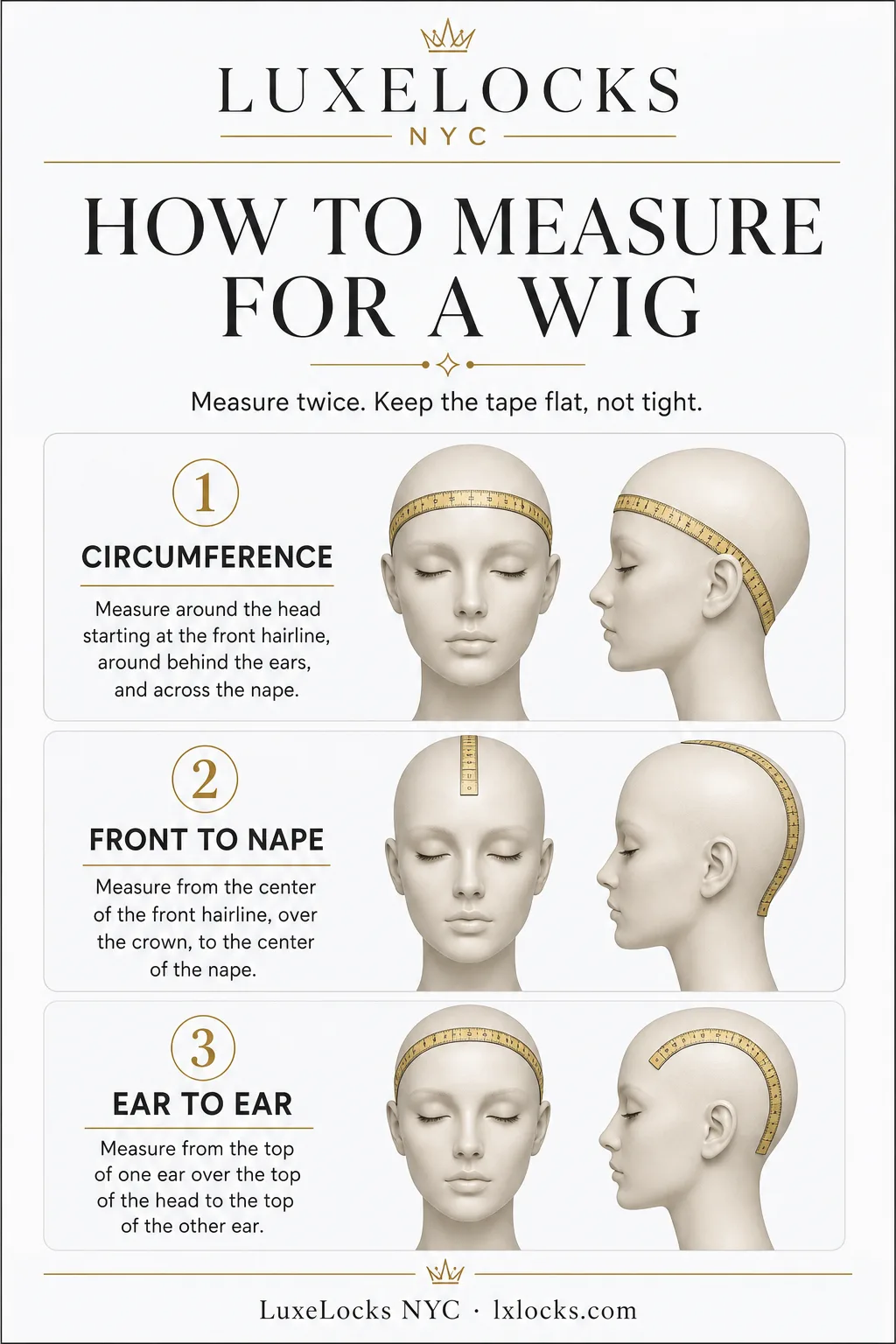
How Should a Wig Fit?
A well-fitted wig feels secure when you turn your head, but it should not feel like a tight band. The front should sit near your natural hairline, the ear tabs should be level, the crown should not bunch, and the nape should lie flat rather than ride upward.
| Fit check | What you want to see or feel |
|---|---|
| Hairline | Sits in a natural position without being pulled far forward or pushed back. |
| Ear tabs | Rest evenly on both sides without bending into the ears. |
| Crown | Lies smoothly without a large empty pocket or compressed pressure point. |
| Nape | Stays flat when you look down and does not climb upward. |
| Overall comfort | Secure without headache, numbness, pulling, or persistent pressure. |
How to Measure Your Head for a Wig
Use a soft sewing tape and measure over flattened hair. Keep the tape level and close to the head, but do not pull it tight. Take each measurement twice. If the two results differ, measure again before writing the number down.
1. Circumference
Start at the center of your front hairline. Guide the tape above one ear, around the nape, above the other ear, and back to the starting point. Check in a mirror that the tape has not slipped higher at the back.
2. Front to nape
Measure from the center of the front hairline, over the crown, to the point at the nape where you want the cap to end. This measurement helps reveal whether a cap may feel too shallow or too deep.
3. Ear to ear over the top
Place the tape at the top of one ear, pass it over the crown, and stop at the top of the other ear. This helps you compare the width of the cap and the position of the ear tabs.
Save all three measurements. Circumference is the number most size charts use, but the other two explain many problems that circumference alone cannot.
Petite, Average, and Large Wig Cap Sizes
Size names are not perfectly standardized. The ranges below are common examples, not a guarantee for every brand or every cap design. Always use the measurements on the individual product page when they are available.
| Common size label | Typical circumference range | What to confirm |
|---|---|---|
| Petite | Often below 21 inches | Cap depth and ear-tab position can still vary. |
| Average | Often about 21 to 22.5 inches | Check the exact product chart and adjustment range. |
| Large | Often 23 inches or more | Confirm both circumference and front-to-nape depth. |
Do not assume that every LuxeLocks style has the same cap measurement or internal construction. If a product page does not give enough fit information, use the LuxeLocks wig size guide and ask us to confirm the available details before ordering.
Signs a Wig Cap Is Too Tight
- Pressure develops across the forehead, temples, behind the ears, or at the nape.
- The ear tabs pull upward or will not sit in the same position on both sides.
- The front edge creeps backward even after the straps are loosened.
- The cap feels shallow because the crown cannot settle into place.
- You experience headache, numbness, pain, or persistent pulling.
Start with the adjustable straps at their loosest setting and make sure your natural hair is distributed flat rather than concentrated in one bulky area. Remove a thick grip band or bulky under-cap during the fit check because either one can reduce the available room.
Do not keep wearing a painful cap while waiting for your head to “adjust.” A fit that causes pain or numbness needs to be removed and reassessed. Do not cut elastic, stretch the cap with heat, or alter the internal construction unless you understand that specific wig and accept that an alteration may affect returns.
Signs a Wig Cap Is Too Loose or Too Deep
- The wig shifts when you turn your head even after the straps are adjusted evenly.
- Extra cap material forms a pocket or fold at the crown.
- The nape rides up or the hairline moves forward during normal movement.
- The ear tabs sit too low, cover part of the ears, or do not align.
- You keep pulling the wig back into place throughout the day.
Flatten your natural hair first, then tighten both sides gradually and evenly. A wig grip can add friction for some wearers, but it also adds thickness, so it should not be used to solve a cap that is already tight. If a fully adjusted cap still has a large empty pocket or slips repeatedly, a different cap size or shape is usually a cleaner solution than aggressive alteration.
Tight, Loose, or the Wrong Shape?
| What happens | Likely fit issue | First safe check |
|---|---|---|
| Pressure around the entire perimeter | Circumference may be too small | Loosen straps and remove bulky layers underneath. |
| Pressure mainly at the crown | Cap may be too shallow | Recheck front-to-nape measurement and hair placement. |
| Ear tabs sit too low | Cap may be too deep or wide | Check ear-to-ear measurement and crown excess. |
| Wig slides but crown is smooth | Circumference may be too large | Adjust straps evenly and test gentle movement. |
| Wig slides and crown bunches | Cap may be both too large and too deep | Compare all three measurements with the product chart. |
Check the Fit Before Changing the Wig
- Keep all tags attached and review the store’s return conditions.
- Flatten your natural hair in the way you expect to wear it.
- Begin with adjustable straps at the loosest position.
- Place the wig at the natural hairline and align both ear tabs.
- Check the crown and nape for empty pockets, folds, or pressure.
- Turn your head gently left and right, then look down.
- Adjust both straps in small, even steps only if more security is needed.
- Stop if the cap causes pain, headache, numbness, or strong pulling.
This check should happen before trimming bangs, cutting lace, using adhesive, adding heat, or altering the cap. Those changes may make a return impossible.
Cap Construction Can Change the Fit
Two caps with the same labeled circumference can feel different. Open-wefted caps may flex differently from structured caps, while lace-front or monofilament sections can change how the front and crown sit. Read our beginner guide to wig cap construction before comparing styles with different internal designs.
If this is your first order, use the first-wig buying checklist to compare length, bangs, color, maintenance, and fit together. A shorter style can be easier to handle, but length does not guarantee a particular cap size.
Choosing a LuxeLocks Style After Measuring
Start with the fit information available on each product page, then choose the color and length. You can browse beginner-friendly synthetic wigs, compare the short wig collection, or review all available wigs. Ask about any missing cap detail before ordering rather than assuming every style fits the same way.
Wig Cap Size FAQ
How do I measure for a wig?
Measure circumference, front-to-nape, and ear-to-ear over the crown with a soft tape over flattened hair. Keep the tape level without pulling it tight, and repeat each measurement.
What if I am between wig sizes?
Compare the product’s adjustment range and the other two measurements, not only circumference. If the smaller option would require wearing the straps fully loose or causes pressure, forcing the smaller cap is not a good fit strategy.
Can adjustable straps fix any wig size?
No. Straps provide a limited adjustment and mainly change the nape circumference. They cannot fully correct a cap that is too shallow, too deep, or too wide across the crown.
Why does my wig hurt behind my ears?
The cap may be too tight, too shallow, incorrectly positioned, or made tighter by a thick layer underneath. Remove the wig, loosen the straps, flatten the hair, and check whether the ear tabs align. Do not continue wearing it if pain or numbness remains.
Why does my wig bunch at the crown?
A crown pocket can mean the cap is too deep, your hair is not distributed evenly, or the cap is not pulled fully into position. Recheck front-to-nape and ear-to-ear measurements before altering the wig.
Should I use a wig grip?
A grip can add friction when a correctly sized cap needs more security. It also adds thickness, so it may make a tight cap less comfortable. Check the fit both with and without it.
Measure first, check the exact product information, and ask when a cap detail is unclear. Browse synthetic wigs after saving your measurements, or contact LuxeLocks for fit information before ordering.