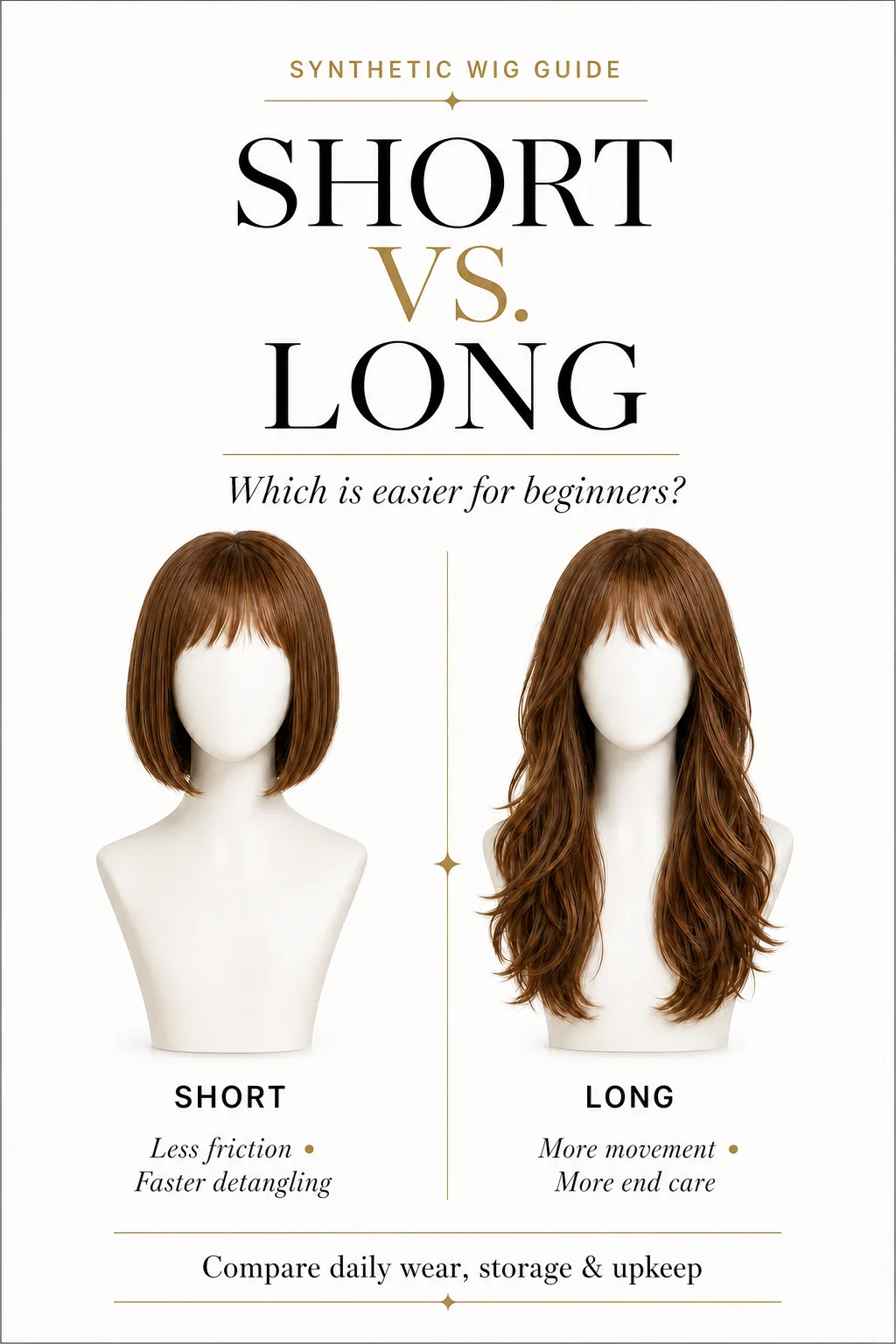

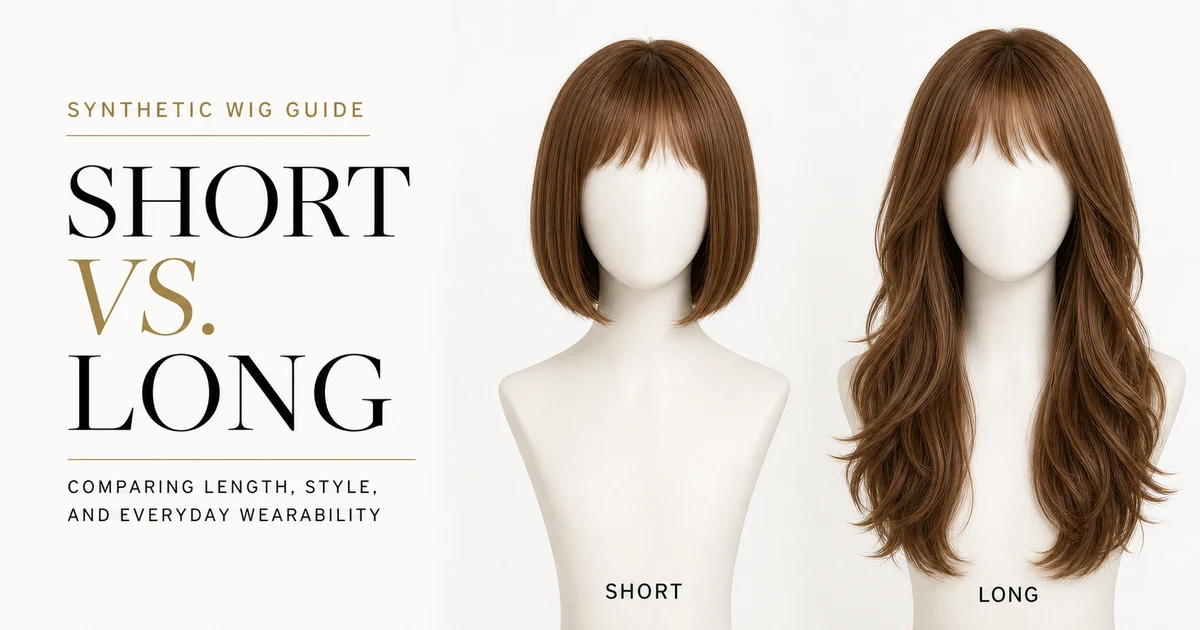
Short synthetic wigs are usually easier for beginners to detangle, store, and wear around collars. Long synthetic wigs offer more styling impact, but the nape and ends experience more friction and need more frequent attention. The better first choice depends on how much maintenance you want, not on length alone.
Length changes more than the silhouette. It affects how often the fibers contact clothing, how the wig fits into your routine, and how carefully it needs to be stored. This guide compares the practical tradeoffs so you can choose a length you will enjoy wearing.
Short vs Long Synthetic Wigs at a Glance
| Decision | Short synthetic wig | Long synthetic wig |
|---|---|---|
| Daily detangling | Usually quicker | Usually needs more attention at the nape and ends |
| Contact with collars | Less fiber may touch clothing | More friction from collars, scarves, and seat backs |
| Storage | More compact | Needs enough room to avoid folded or crushed ends |
| Visual effect | Clean, compact silhouette | More movement and a more dramatic silhouette |
| Beginner learning curve | Often simpler | Manageable when you are prepared for the maintenance |
Why Length Changes Synthetic Wig Maintenance
Synthetic fibers do not receive natural scalp oils along their length. Friction from clothing, hands, bags, chairs, and storage can make the surface feel rougher over time. A longer wig has more fiber available to rub against those surfaces, especially behind the neck and across the shoulders.
This does not mean long synthetic wigs are automatically poor choices. It means the wearer needs to detangle gently, store the length without crushing it, and pay attention to the nape before a small knot becomes a larger one.
For general maintenance, use the synthetic wig care guide. If tangling has already developed, follow the detangling and matted-wig guide.
When a Short Synthetic Wig Is the Easier Choice
A short wig may suit you if you want a compact daily style, commute often, wear collared clothing, or prefer a quick storage routine. Bobs and other short cuts can still require shaping and care, but there is less length to pass across the shoulders or catch beneath jackets.
Short wigs may work well when you:
- Want a quicker after-wear detangling routine
- Wear jackets, scarves, uniforms, or high collars regularly
- Have limited storage space
- Prefer a defined bob or face-framing shape
- Do not want long ends contacting a chair or car seat
Short does not automatically mean “no maintenance.” Bangs may need light positioning, and the original cut still needs to be stored without being flattened. Compare current short wigs 16 inches or less.
When a Long Synthetic Wig Is Worth the Extra Care
A long wig may be the better choice when length is central to the look you want. Long straight, layered, and wavy styles provide movement and styling presence that a bob cannot reproduce. The tradeoff is a more deliberate care routine.
Long wigs may work well when you:
- Want length to be the main feature of the style
- Are comfortable detangling the nape and ends after wear
- Have room to store the wig without folding the fibers
- Do not mind moving the hair away from bags, zippers, and seat backs
- Prefer waves or layers that extend below the shoulders
Browse long wigs from 21 to 25 inches or compare extra-long wigs when the dramatic length is worth the added routine.
Daily Wear: Collars, Bags, and Commuting
Think about what the wig touches during a normal day. A shoulder bag strap can trap long fibers. A coat zipper can catch the ends. A car headrest or office chair can create repeated friction at the back. Short wigs reduce some of these contact points, while long wigs require more awareness.
For a long style, move the hair forward before putting on a coat or bag, and check the nape after wearing. Avoid pulling a comb through a large knot from the roots. Work in small sections from the ends upward.
Storage Differences
Both short and long synthetic wigs should be dry and gently detangled before storage. A short wig is easier to keep within a compact space, but its cut can still be crushed. A long wig needs enough vertical or horizontal room for the ends to lie naturally without being folded beneath the cap.
If you travel, arrange the fibers in their natural direction and use a container large enough for the style. Do not put a damp wig into a closed bag.
Does Wig Texture Change the Answer?
Yes. Length is only one factor. Waves, curls, layers, fiber finish, and density affect how the style behaves. A layered long wig may move differently from a blunt straight wig. Curled or waved fibers should be handled in a way that protects the intended pattern rather than repeatedly brushed flat.
Before buying, read the actual texture and care information on the product page. Do not assume that every synthetic wig supports the same brush, heat setting, or styling method.
Two Current Length Examples
These two in-stock LuxeLocks products illustrate the length decision. The comparison below uses only the currently listed style details; check each product page for the latest images, price, construction, and care information.
- Warm Brown Short Bob Wig with Bangs: listed as a 12-inch straight synthetic bob. The shorter length is useful for comparing a compact silhouette with a finished fringe.
- Warm Brown Long Wavy Wig with Bangs: listed as a 24-inch layered synthetic style. It shows the added movement and below-shoulder length that require more attention around clothing and storage.
Which Length Should a Beginner Choose?
Start with your tolerance for maintenance. If you want the easiest routine, short or shoulder-length is the more conservative choice. If long hair is the reason you want a wig, choose the long style and plan for its care instead of buying a shorter wig you will not enjoy.
- Choose your real-life use: daily, occasional, work, or special events.
- Decide how much detangling and storage effort feels realistic.
- Check whether collars, scarves, bags, or commuting will create friction.
- Compare the product’s actual length, texture, and care instructions.
- Measure your head and check available fit information.
- Read shipping and return conditions before altering the wig.
For the complete first-purchase process, use the first-wig beginner checklist and the wig size guide.
Short vs Long Wig FAQ
Are short synthetic wigs better for beginners?
They are often easier to detangle and store, but “better” depends on the style you want and the product’s fit and construction. A manageable routine is more important than following one length rule.
Do long synthetic wigs always tangle?
Long fibers experience more contact and friction, so tangling is more likely at the nape and ends. Gentle detangling, careful storage, and reducing friction can make the routine more manageable.
What is the easiest synthetic wig length?
Short and shoulder-length styles are generally easier to manage because less fiber contacts clothing and furniture. Texture and construction still matter.
Can a beginner wear a 24-inch synthetic wig?
Yes, if the wearer is comfortable with regular nape-and-end care and has suitable storage space. Long length is a maintenance choice, not an experience requirement.
Are bob wigs maintenance-free?
No. They still need appropriate detangling, washing, drying, and storage. The shorter length simply reduces some common friction points.
Should I choose short or long hair for daily wear?
Choose short or medium length when speed and convenience are the priority. Choose long hair when the length is important enough to justify extra care.
Compare every available length in all synthetic wigs. Review the shipping policy and return policy before ordering.
Short vs. long synthetic wigs at a glance
Short styles usually collect less friction at collars and bag straps, so detangling and storage are simpler. Long styles offer more movement, but the nape and ends need more frequent attention.