

Synthetic wig care is mostly about controlling friction, buildup, moisture, and heat. Detangle from the ends upward, wash only when the fiber actually needs it, let the wig air-dry completely, and confirm the individual product is heat-friendly before using a hot tool.
You do not need a crowded shelf of products or a rigid wash calendar. A better routine starts by identifying what changed: Is the nape tangled, are the ends dry-looking, does the fiber feel coated, or has the style been crushed in storage? Use the matching care step instead of treating every problem with more product.
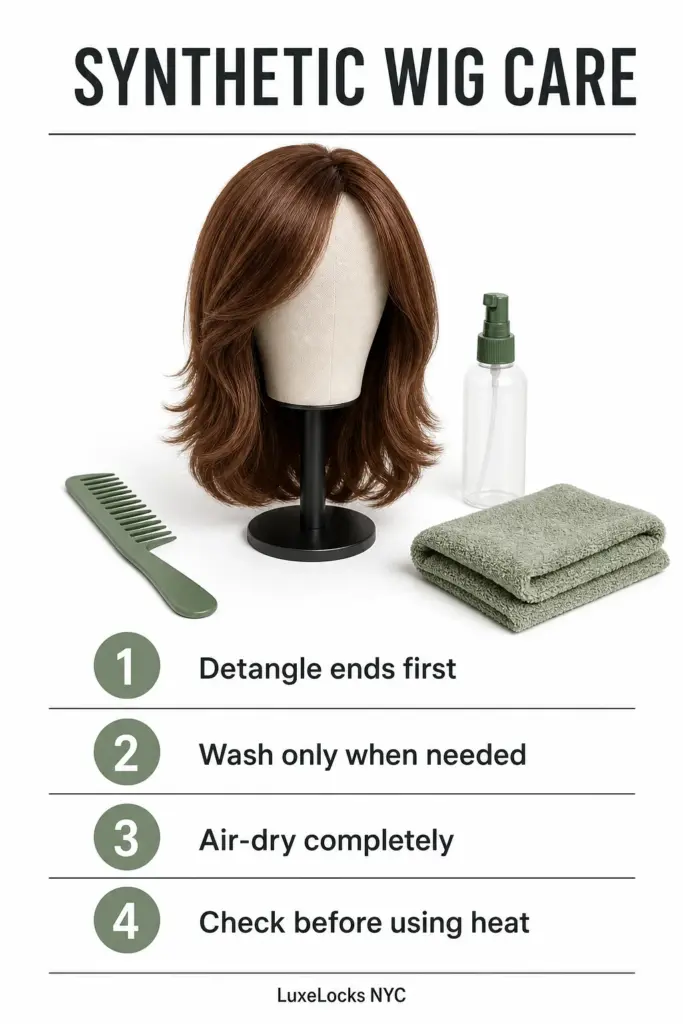
Synthetic Wig Care at a Glance
Small tangles at the nape
Likely cause: Collar, scarf, seat, or shoulder friction.
Start here: Separate small sections and detangle the ends first.
Fiber feels coated or dull
Likely cause: Product, skin oil, smoke, or environmental buildup.
Start here: Wash with cool water and a synthetic-wig cleaner.
Ends feel rough but the rest looks clean
Likely cause: Repeated rubbing or brushing.
Start here: Use a small amount of synthetic-safe detangler and work slowly.
Style looks flattened after storage
Likely cause: Compression or damp storage.
Start here: Let it settle on a stand; reshape only with methods approved for that wig.
Cap feels less secure
Likely cause: Fit, adjustment, or cap wear.
Start here: Check the fit before tightening or adding accessories.
If the main problem is fit rather than fiber care, use the wig cap size and fit guide. If the wig moves during the day, the daily-wear guide explains no-glue grip options and a simple movement test.
What to Do After Each Wear
1. Check the nape and ends before putting the wig away
Run your fingers gently through the lower sections. Small tangles are easier to separate before they tighten around nearby fibers. Long styles usually need a closer nape-and-ends check because more fiber touches clothing and the shoulders.
2. Let moisture and warmth dissipate
If the cap or hairline feels damp, do not seal the wig immediately in a bag or box. Place it where air can circulate and keep it away from direct sun or a heater. Store it only after the cap and fiber feel dry.
3. Remove only the product you actually need to remove
A light mist of styling product does not automatically mean the whole wig needs washing. If the fiber still feels clean and moves normally, gentle detangling and proper storage may be enough. Washing is useful for real buildup, not as a reflex after every wear.
How to Detangle a Synthetic Wig Safely
- Place the wig on a stable stand or hold the cap securely without pulling the lace, hairline, or adjustment area.
- Divide long or dense-looking sections with your fingers so you can see where resistance begins.
- Start at the final inch or two of the ends. Hold the fiber above the tangle to reduce tension on the cap.
- Use your fingers first, then a wide-tooth comb or brush intended for synthetic wigs if needed.
- Move upward only after the lower section passes through without force.
- Stop if the fibers stretch, kink, or resist more as you work. Pulling harder usually makes the section less manageable.
For a tightly matted section, follow the more detailed synthetic wig detangling guide. For recurring roughness at the back, see why synthetic wigs tangle at the nape; it separates friction, buildup, and fiber type instead of assuming the wig is defective.
When and How to Wash a Synthetic Wig
There is no universal wash frequency. Someone wearing a wig occasionally in a cool indoor setting may wash less often than someone wearing it daily, using styling product, or spending time in heat and humidity. Let the condition of the wig decide.
Wash when you notice one or more of these signals:
- a persistent odor;
- visible or touchable product buildup;
- a coated, sticky, or unusually dull feel;
- the style no longer moves normally after gentle detangling.
Use cool water and a cleaner labeled for synthetic wigs. Avoid rubbing the fiber against itself, scrubbing the cap, twisting, or wringing. Rinse gently and blot with a clean towel. The complete sequence is in How to Wash a Synthetic Wig Without Ruining It.
How to Dry a Synthetic Wig Without Disturbing the Style
After rinsing, support the wig while excess water drains. Blot rather than twist. Place it on a suitable stand in a ventilated indoor area and let it air-dry fully before brushing or wearing it.
Avoid direct sun, radiators, clothes dryers, and unconfirmed blow-dryer heat. Wet synthetic fibers can be more vulnerable to stretching and shape changes, so do not make aggressive corrections while the wig is damp. Once dry, use fingers and gentle tools to settle the style.
Heat, Steam, and Styling: Check the Individual Wig
“Synthetic” does not describe one universal heat tolerance. Some fibers are made for controlled heat styling; others can permanently change with heat. Only use a hot tool or heated steam method when the individual product information confirms that it is appropriate, then stay within the stated guidance.
If heat compatibility is not stated, treat it as unconfirmed. Finger styling, careful part placement, light synthetic-safe product, and proper storage are the lower-risk options. Do not apply a temperature copied from a different wig or a general social-media tutorial.
A Small, Practical Synthetic Wig Care Kit
- Wide-tooth comb or synthetic-wig brush: for small sections, beginning at the ends.
- Synthetic-wig cleaner: for washing when buildup or odor appears.
- Light synthetic-safe detangler: used sparingly where the fiber needs slip.
- Clean towel: for gentle blotting after rinsing.
- Wig stand: for drying and short-term shape support.
- Breathable storage with enough room: for longer storage without crushing the style.
More product is not automatically better. Heavy oils, thick creams, and repeated sprays can create the very buildup that makes a wig look dull or causes strands to cling together.
Short vs. Long Wigs: Different Care Tradeoffs
Length changes how much fiber meets clothing and how much time detangling can take. A short bob may be easier to check quickly after wear, while a long style gives more movement but usually needs more attention at the nape and ends.
Short bob
What to watch: Back-of-neck friction, bangs placement, and keeping the shape from being crushed.
Example to compare: 12-inch ash brown-blonde bob with bangs.
Long straight style
What to watch: Nape tangles, rough ends, clothing friction, and careful section-by-section combing.
Example to compare: 24-inch warm brown straight wig with bangs.
Those links are useful as visual comparisons, not a promise that one length is right for every wearer. Review each gallery, length, color, price, and current product details before choosing. You can also compare the broader tradeoffs in Short vs. Long Synthetic Wigs for Beginners.
Common Synthetic Wig Care Mistakes
- Brushing from the roots: this can tighten tangles and transfer force to the cap.
- Forcing one large section: divide it and solve the ends before moving upward.
- Washing on a rigid calendar: use odor, buildup, and feel as the decision signals.
- Twisting or wringing: blot gently and support the wet wig.
- Brushing while wet: let the wig air-dry before normal detangling.
- Using heat without product-specific guidance: an unverified temperature can permanently alter the fiber.
- Sleeping in the wig: pillow friction can create matting, especially at the nape.
- Layering heavy product: excess residue can make fibers look dull and stick together.
- Storing while damp or crushed: dry fully and leave enough room for the style.
See 10 synthetic wig mistakes beginners make for a broader first-wig checklist.
When Care Is No Longer Restoring the Wig
Replacement timing depends on wear frequency, length, friction, fiber type, and care. Consider replacing the wig when the ends remain severely rough after patient detangling, the cap no longer feels secure after a proper fit check, or the original shape cannot be restored with methods supported by that product.
Before replacing it, make sure the problem is not simply buildup, a small hidden tangle, poor storage, or a fit adjustment. Care can improve a manageable wig, but it cannot reverse every form of fiber wear.
Synthetic Wig Care FAQ
How often should I wash a synthetic wig?
Wash when you notice odor, buildup, a coated feel, or reduced movement rather than following one fixed number of wears. Your climate, products, and wear frequency all affect the timing.
Can I brush a synthetic wig when it is wet?
It is usually safer to let the wig air-dry completely first. Then detangle gently from the ends upward with a suitable comb or brush.
Can I use regular shampoo?
A cleaner labeled for synthetic wigs is the safer starting point. Products designed for human hair may leave residue or behave differently on synthetic fiber.
Can I use heat on a synthetic wig?
Only when that specific wig is clearly described as heat-friendly. Follow its individual guidance rather than applying one temperature to every synthetic wig.
What is the best way to store it?
Let it dry fully, detangle it, and keep it away from sunlight, heat, dust, and friction. Use a stand between wears or a roomy breathable container for longer storage.
How can I reduce nape tangling?
Reduce contact with rough collars and scarves, check the nape after wearing, and separate small tangles before storage. Longer styles need more frequent nape checks.
How do I make a synthetic wig last longer?
Handle only the section that needs attention, reduce friction, avoid excessive product, wash when needed, air-dry fully, and do not use unconfirmed heat. These habits reduce avoidable wear, although no routine can prevent normal fiber aging.
When you are ready to compare styles, browse all synthetic wigs or begin with the wig size guide so care and fit are considered together.