

Short answer: A synthetic wig often tangles first at the nape because that section repeatedly touches collars, shoulders, skin, and the underside of the wig. Longer fibers also move across one another throughout the day. Deal with small snags early: remove the wig, support the section with one hand, and work from the ends upward with your fingers or a wide-tooth comb. Do not begin at the roots, pull through resistance, or add heat unless the wig is specifically labeled heat-friendly.
A rough patch after a few hours does not automatically mean the wig is ruined. It does mean the fibers need attention before the small tangles tighten into a mat. The routine below separates safe everyday care from techniques that depend on the exact fiber.
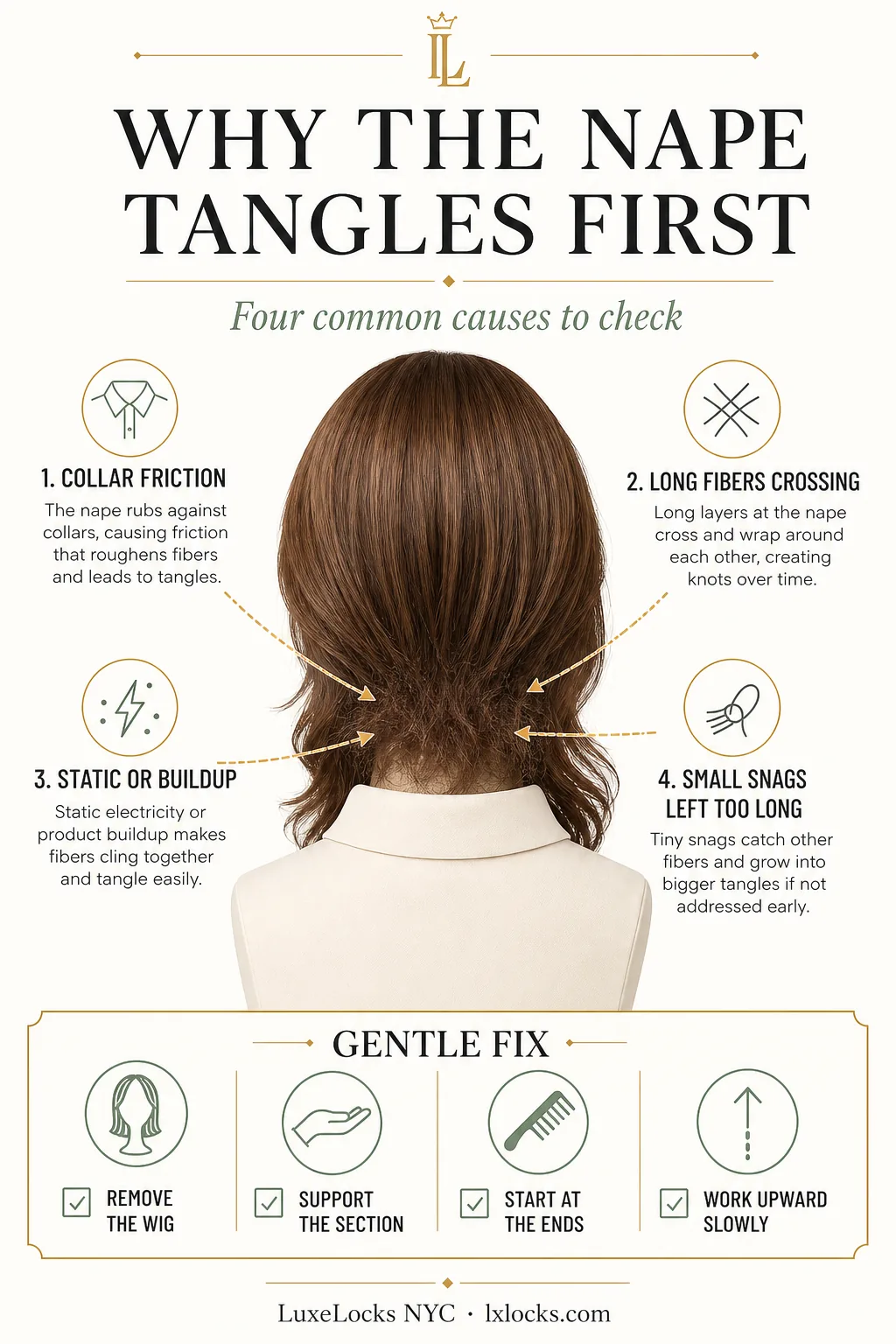
Why Does a Synthetic Wig Tangle at the Nape?
The nape is a high-contact area. Every time you turn your head, lean against a chair, wear a collar, or let long hair rest across your shoulders, the underside moves against another surface. That repeated contact creates friction and static. Curled, textured, and long styles have more points where fibers can cross, so they usually need more frequent checks than a chin-length bob.
Several factors can overlap:
- Clothing contact: high collars, hoodies, scarves, textured knits, and coat shoulders keep rubbing the same section.
- Length: mid-length and long wigs reach the neck and shoulders; short styles may barely touch them.
- Movement: a long section can twist underneath itself when you sit, drive, or carry a shoulder bag.
- Static or dry-feeling fiber: static makes lightweight strands cling together rather than fall separately.
- Product residue: too much spray, dry shampoo, makeup, or skin-care residue can make the underside feel coated and easier to snag.
- Delayed care: a few loose crossings are easy to separate; repeated wear can tighten them into a dense patch.
A quality problem is still possible. Contact the seller if a new wig arrives with fused, melted, sharply kinked, or densely matted fiber before wear. Normal friction should not be used to dismiss a genuine arrival issue.
A Five-Minute Nape Detangling Routine
Use this routine when the wig is dry unless its care label says otherwise. Removing the wig gives you better control and reduces pulling on the cap.
- Place the wig on a stable stand. A simple wire or plastic stand is enough. Make sure the wig cannot slide while you work.
- Separate the nape from the rest. Clip the upper hair loosely out of the way without catching the cap or lace.
- Start with your fingers. Open the largest crossings first. If a knot does not release, do not tighten it by pulling both sides.
- Support the fiber above the snag. Hold the section several inches above the ends so the comb does not transfer tension to the cap.
- Work from the bottom upward. Use short, gentle passes through the last inch or two. Move higher only when the ends pass freely.
- Use a synthetic-wig detangler sparingly if needed. Apply it to the affected lengths rather than saturating the cap. Follow the product directions.
- Check before storing. The nape and ends should move separately. A small snag left overnight is likely to be tighter at the next wear.
If the section will not release with gentle passes, stop. Repeated force stretches and frizzes the fiber. A heavily matted wig needs a slower section-by-section rescue; follow our matted synthetic wig detangling guide rather than trying to finish it in five minutes.
Quick Diagnosis: Tangle, Buildup, or Fiber Damage?
| What you notice | Likely situation | Best first step |
|---|---|---|
| A few loose crossings at the nape | Recent friction or movement | Finger-separate, then comb from the ends upward |
| Hair feels sticky or coated | Product, sweat, or skin-care buildup | Detangle first, then wash according to the fiber care label |
| Static strands cling to clothing | Dry conditions or fabric contact | Use a light synthetic-wig conditioning or detangling product as directed |
| Ends look fuzzy but still separate | Early friction wear | Reduce contact and maintain the section after each wear |
| Fibers look fused, melted, or permanently kinked | Possible heat or mechanical damage | Stop combing and check the manufacturer guidance or ask a wig professional |
How to Prevent Nape Tangles During the Day
Choose smoother clothing around the neck
A soft, low neckline usually creates less repeated contact than a rough knit, hoodie, or high coat collar. You do not have to avoid winter clothing, but expect to check the nape more often when the wig sits directly on textured fabric. Move long hair over one shoulder before putting on a coat, seat belt, backpack, or crossbody strap.
Check once before the problem becomes visible
For a long wig, run your fingers through the underside during a break or when you take it off. You are looking for early crossings, not trying to restyle the whole wig. This small check is more useful than waiting until the nape has formed one dense patch.
Store it only after the fibers are separated
Remove clips and accessories, separate the nape, and place the wig on a stand away from direct sunlight and heat. Do not compress a tangled long wig into a drawer or bag. For longer storage, arrange the fibers in their natural direction and use the net supplied with the wig if appropriate.
Use less product, not more
More spray does not always create more slip. Heavy layers can attract dust and make the underside feel tacky. Choose products labeled for synthetic wigs and begin with the smallest amount directed on the bottle. Keep conditioners and detanglers away from hand-tied knots or delicate base areas unless the manufacturer says they are safe there.
Should You Wash a Tangled Synthetic Wig?
Do not use washing as the first detangling step. Water can tighten existing crossings, especially if the wig is rubbed, swirled aggressively, or piled into a basin. Gently remove tangles before washing. Then follow the wig’s own care label, use cool water and a product intended for synthetic fiber, keep the hair moving in one direction, and air-dry it without wringing.
Wash because the wig has sweat, odor, or product buildup, not simply because one section crossed over itself. Our complete synthetic wig washing guide explains the sequence and the signs that a wash is actually needed.
Traditional Synthetic and Heat-Friendly Fiber Are Not the Same
Never assume a synthetic wig can be steamed, flat-ironed, or exposed to a certain temperature. Traditional synthetic fiber can be permanently damaged by styling heat. Heat-friendly synthetic fiber may allow controlled heat, but the safe method and temperature vary by the manufacturer and product.
Check the product page, packaging, or care card before using any heated tool. If no verified temperature is available, treat the wig as non-heat-safe. A technique shown for one brand’s heat-friendly fiber is not a universal instruction for every synthetic wig.
What Not to Use as a Universal Fix
- Do not yank a brush from roots to ends. It tightens snags and transfers force to the cap.
- Do not use an unverified flat-iron or steamer setting. Heat tolerance is product-specific.
- Do not assume fabric softener is wig conditioner. Household formulas are not designed or tested as universal synthetic-wig care products.
- Do not cut out a knot while the fiber is under tension. It is easy to remove more hair than intended or damage the cap.
- Do not coat the base with oils or detangler. Residue around knots, lace, or the cap can create other problems.
Does a Shorter Wig Tangle Less?
Usually, a shorter style is simpler around the nape because less hair reaches the collar and shoulders. That does not make every bob maintenance-free, but it reduces one major source of friction. A long wig gives more movement and styling presence, with the tradeoff of more frequent end and nape care.
For a concrete comparison, look at the length and silhouette of the Warm Brown Short Bob Wig with Bangs beside the Warm Brown 24 Inch Long Wavy Wig with Bangs. Choose the shorter option if a low-contact neckline matters most; choose the longer look only if you are comfortable checking the underside and ends after wear. Our short versus long wig guide covers the broader beginner tradeoffs.
When Is the Fiber Too Damaged to Detangle?
There is no honest universal lifespan. Wear frequency, length, fiber type, clothing, storage, and care all change how long a synthetic wig remains wearable. Replacement may be more practical when the nape stays fused or rough after gentle care, the ends have lost their original shape, or restoring one section removes too much density.
If you are unsure whether the issue is buildup, a tight cap, or damaged fiber, stop before altering the wig. Use the LuxeLocks contact page to send a clear photo of the affected area and the product name.
Frequently Asked Questions
Why does my new synthetic wig tangle after only a few hours?
The underside may be rubbing against a collar, shoulder, or chair while the longer fibers move across one another. Check the nape early, use gentle ends-to-roots detangling, and document the condition if the wig arrived already matted or fused.
Can I detangle a synthetic wig while wearing it?
You can finger-separate a very small crossing, but removing the wig is safer for a real detangling session. It lets you support the fiber and prevents repeated pulling on your head and the cap.
Can I brush a curly synthetic wig?
Follow the fiber and style instructions. A wide-tooth comb or fingers are generally gentler, but combing through a factory-set curl can loosen its pattern. Work in small sections and reshape the curl rather than brushing the entire style straight.
Will washing remove frizz?
Washing can remove residue, but it does not reverse melted, stretched, or permanently kinked fiber. Detangle before washing and use the care method specified for that wig.
How can I make a long synthetic wig easier to maintain?
Reduce collar friction, move the hair clear of straps, check the nape during and after wear, use only suitable synthetic-wig products, and store it fully detangled. See the beginner synthetic wig care guide for a complete routine.
Care References
The handling principles in this guide are consistent with official synthetic-fiber care instructions from Jon Renau and Ellen Wille: detangle gently before washing, work from the ends upward, use cool water, avoid rubbing, and distinguish regular synthetic fiber from heat-friendly fiber. Always let the care label for your specific wig take priority.
Next step: If neckline friction is your main concern, compare short synthetic wigs before choosing a long style. A simpler length is often the easiest maintenance decision a first-time wearer can make.